
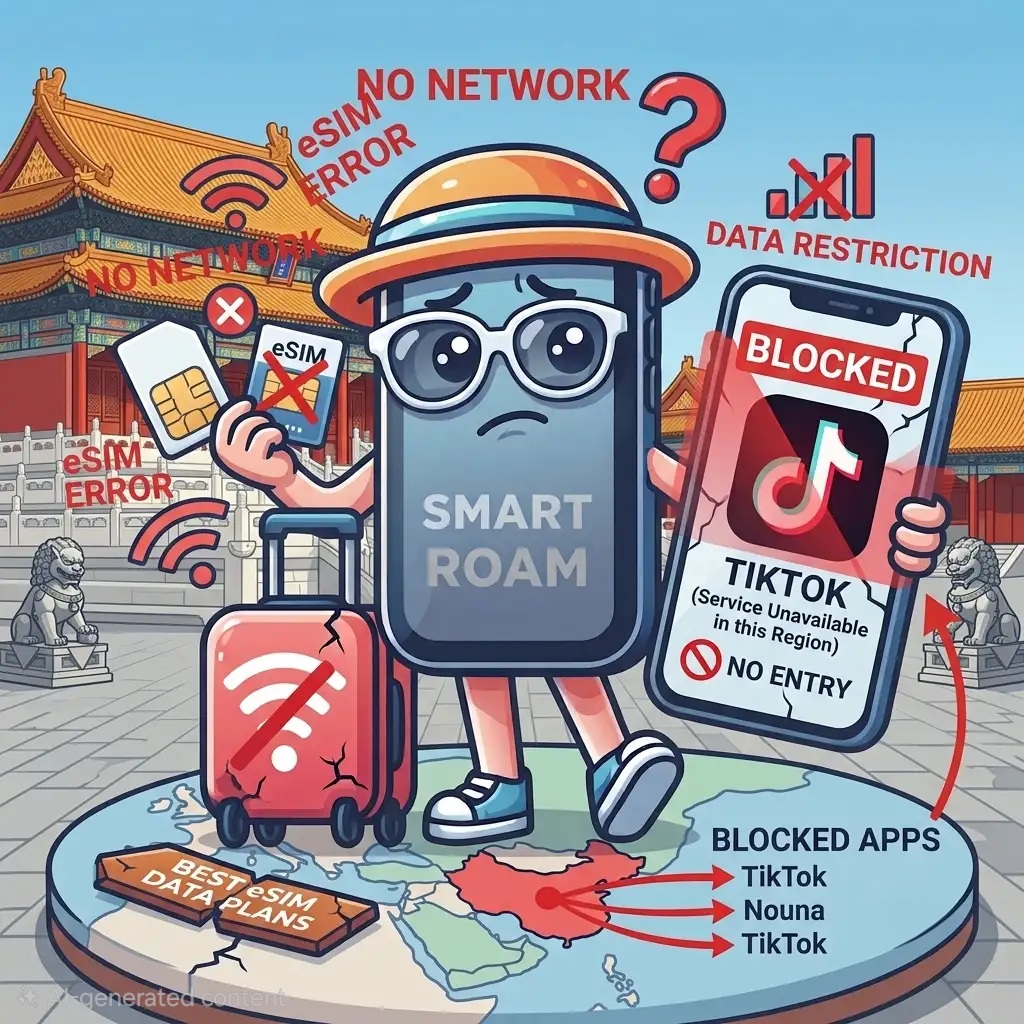
Shopping for cheap China travel eSIMs on sites like Trip.com? You might run into a feature called “Intelligent IP Address” routing. While these plans promise cheap data, they often break when you share your connection via a mobile hotspot or run secure work profiles on your phone.
SMARTROAM
What Is “Intelligent IP Routing” in Travel eSIMs?
To cut costs, certain discount eSIM providers route your internet traffic through two different locations based on the app you open on your primary phone profile:
- Standard Apps (Web Browsing, Local Maps): Routed through lower-cost Hong Kong IP nodes.
- Restricted Apps (TikTok, ChatGPT): Swapped over to Singapore IP nodes to bypass Hong Kong-specific platform blocks.
While this dynamic switching works fine if you are browsing social media directly on a single mobile interface, it creates major technical issues the moment you try to use your data across multiple devices or isolated profiles.
Why “Intelligent IP” Breaks Hotspots & Secure Profiles
Intelligent IP switching relies on software inspection at the primary device layer. The routing engine breaks down when traffic does not originate from the default mobile workspace:
Traveling with Family or Multiple Devices?
Tethering your laptop or buying four separate phone eSIMs drains batteries and runs up costs. The Linklan LA7 Open Pocket Wi-Fi connects up to 16 devices on an independent 5,000mAh battery (12+ hours runtime) using any low-cost travel eSIM profile.
1. Hotspot & Tethering Failures
When you tether data to a laptop, tablet, or secondary phone, the network packets are bundled together over a network bridge. The dynamic IP script fails to identify individual app protocols, causing connected devices to revert to the default Hong Kong route. Result: TikTok, ChatGPT, and AI tools stop working on tethered devices entirely.
2. Knox & Work Profile Blocks
Android Work Profiles, Samsung Knox, Xiaomi Second Space, and secure enterprise containers isolate application traffic at the OS level. Because the “intelligent” routing layer cannot inspect packets inside these encrypted spaces, your work emails, Slack, and AI tools fail to connect.
Side-by-Side: Dynamic IP vs. Direct-Routed eSIM
| Feature | Dynamic “Intelligent IP” eSIMs (Trip.com, etc.) | Direct Single-Node eSIMs (MobiMatter) |
|---|---|---|
| Primary Device Browsing | Works fine | Works fine |
| Laptop / Tablet Hotspot | ❌ Partial blocks (No TikTok/ChatGPT) | ✅ Full access on all tethered devices |
| Samsung Knox / Work Profiles | ❌ Packet routing drops | ✅ Native routing across all spaces |
| Connection Stability | Unstable due to IP switching | Consistent, single-node IP tunnel |
| Setup Complexity | Requires app permissions | Zero setup (Scan QR & Roam) |
The Smart Investment: Choose Direct Network Tunneling
Saving $2 or $3 on a budget China eSIM becomes an expensive mistake if you realize halfway through a business trip that your laptop cannot access critical tools, or your secondary work profile is completely cut off from the global internet.
Selecting a direct-routed China plan via MobiMatter ensures your data tunnels cleanly through a dedicated node without dynamic trickery. Every byte—whether on your main screen, inside Samsung Knox, or shared to a laptop—receives full, uninhibited access to the open web.
- Data: 3 GB
- Validity: 5 Days
- • Bypasses Great Firewall naturally
- • No VPN software required
- • Single-node direct route
- Data: 12 GB
- Validity: 30 Days
- • Native Google, WhatsApp & Gmail access
- • Samsung Knox & Work Profile compatible
- • Full laptop hotspot support
- Data: 20 GB
- Validity: 30 Days
- • Dedicated offshore IP tunnel
- • Stable streaming & video calling
- • 30-Day extended duration
Pro Tip: Need to work on a laptop while traveling in China? Avoid discount eSIMs using conditional IP routing. Choose a dedicated foreign-carrier profile through MobiMatter to keep your tethered connections working seamlessly.
Leave a Reply