
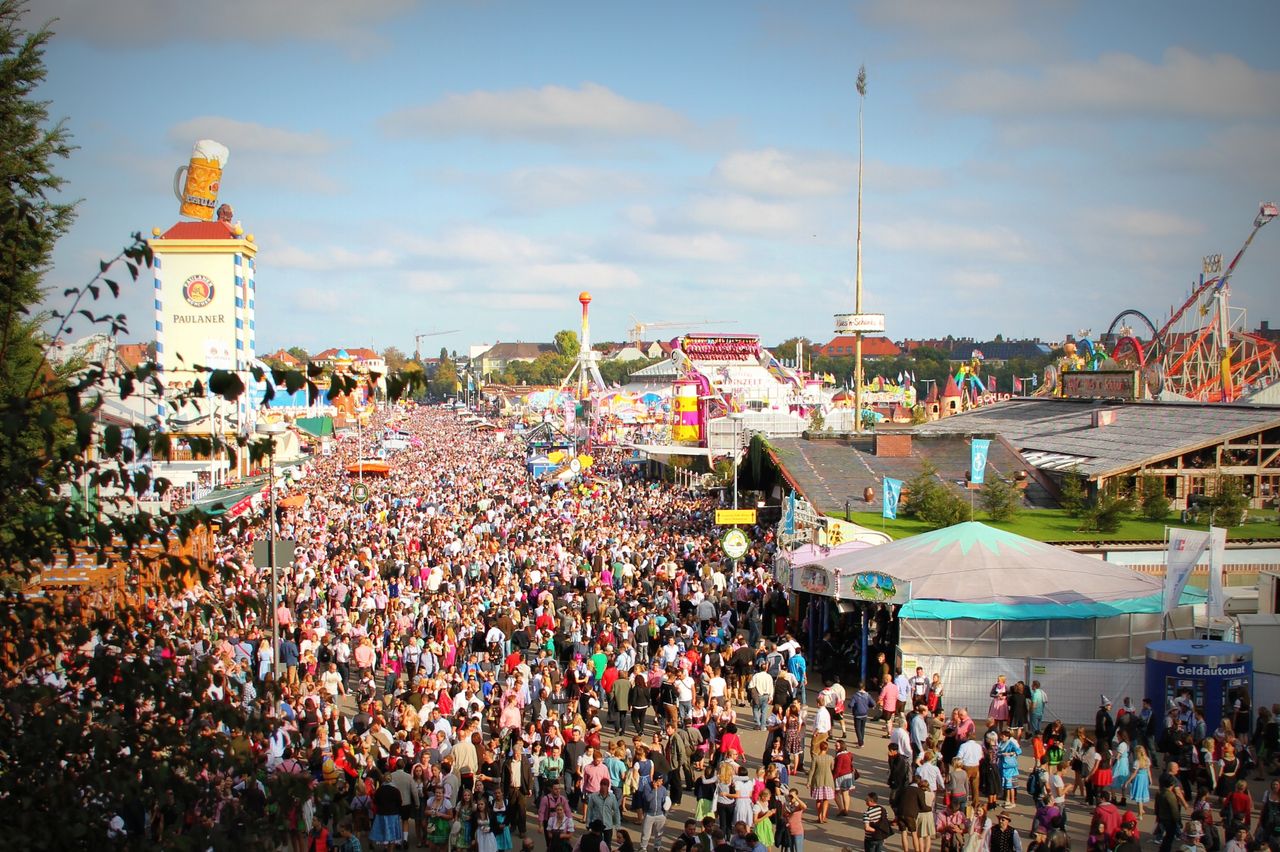
Every autumn, over six million visitors descend upon Munich, Germany, for the world’s largest folk festival: Oktoberfest (Wiesn). Millions of international travelers arrive from the United States, Australia, the UK, and Asia to experience traditional Bavarian culture, brass band music, and historic beer tents. Navigating the massive 42-hectare Theresienwiese festival grounds, catching the U-Bahn, and finding lost friends amid dense crowds requires a dependable mobile connectivity plan.
SMARTROAM
Oktoberfest Culture & Essential Traditions
Oktoberfest began in 1810 to celebrate the royal wedding of Crown Prince Ludwig and Princess Therese of Saxe-Hildburghausen. Today, the festival is a celebration of Bavarian heritage anchored by strict brewing standards and centuries-old customs.
The Reinheitsgebot Rule
Only the six historic Munich breweries (Augustiner, Paulaner, Spaten, Hacker-Pschorr, Löwenbräu, and Hofbräu) that adhere to the 1516 Bavarian Beer Purity Law are permitted to serve festival beer (Märzen/Festbier) in 1-liter glass steins known as Maß.
Trachten & Oide Wiesn
Most attendees wear traditional Bavarian attire: Lederhosen for men and Dirndls for women. For a more relaxed, historical ambiance, the Oide Wiesn section offers historic rides, traditional folk dancing, and vintage brass bands.
Interesting Facts About the World’s Biggest Folk Festival
- Starts in September: Despite its name, the 16-to-18-day festival kicks off in mid-September to take advantage of warmer autumn weather, ending on the first Sunday in October.
- The Mayor’s First Keg: The festival officially begins only after the Mayor of Munich taps the first keg in the Schottenhamel tent, shouting “O’zapft is!” (“It is tapped!”).
- Massive Scale: Over the course of the festival, visitors consume over 7 million liters of beer, half a million roasted chickens (Hendl), and tens of thousands of giant pretzels (Brezen).
Connectivity Challenges on the Theresienwiese
International visitors relying on foreign roaming passes or public Wi-Fi face distinct connectivity hurdles inside the festival grounds:
1. Severe Tower Congestion
Packing over 100,000 people simultaneously into a small geographic footprint strains local cellular towers. Budget roaming passes that do not hold Tier-1 priority access get deprioritized first, leading to failed message deliveries and dropped calls when coordinating group meetups.
2. Tent Shielding & Noise
Giant wooden beer tents act as acoustic and radio barriers. Trying to make regular voice calls inside a tent with 10,000 singing festival-goers is nearly impossible, making high-speed data for messaging apps (WhatsApp, iMessage) and live location sharing essential.
3. Transit Navigation & MVV Tickets
Getting to and from the festival requires using Munich’s MVV public transit system (U-Bahn lines U4/U5 to Theresienwiese or S-Bahn to Hackerbrücke). The MVV app requires active data to purchase transit passes and check real-time crowd diversions.
4. Roaming Bill Shock for Non-EU Visitors
Travelers flying in from the US, Canada, Australia, and Asia do not benefit from EU roaming regulations. Default carrier day passes cost $10 to $15 per day, adding upwards of $150 to your trip budget just for basic data access.
Airport SIM Counters vs. Pre-Activated Travel eSIM
Buying a physical German SIM card upon landing at Munich Airport (MUC) or Frankfurt (FRA) is subject to Germany’s strict telecommunications identification law (Video-Ident KYC), requiring passport verification that can take hours to approve.
Traveling with Family or Multiple Devices?
Tethering your laptop or buying four separate phone eSIMs drains batteries and runs up costs. The Linklan LA7 Open Pocket Wi-Fi connects up to 16 devices on an independent 5,000mAh battery (12+ hours runtime) using any low-cost travel eSIM profile.
A digital travel eSIM installs in minutes from home. When your plane touches down in Germany, your device authenticates directly with premium Tier-1 networks (such as Telekom Germany or Vodafone), ensuring instant connectivity before you reach your hotel.
| Metric | German Airport Kiosk SIM | Home Carrier Daily Roaming | MobiMatter Germany Travel eSIM |
|---|---|---|---|
| Setup Process | Passport scan & Video-Ident queue | Automatic high billing | ⚡ Instant QR code download before flying |
| Average Cost (10–20 GB) | €40 – €60 (Airport markup) | $100 – $150 ($10–$15/day) | $10 – $22 (One-time upfront rate) |
| Network Tier | Single locked carrier | Throttled roaming partner | Tier-1 German networks (Telekom / Vodafone) |
| Hotspot Sharing | Plan restricted | Often throttled | Full tethering support for friends & laptops |
Recommended Germany & Europe eSIM Packages
Whether you are attending Oktoberfest for a weekend or touring Bavaria, Austria, and Switzerland as part of an extended European holiday, MobiMatter offers flexible, high-speed data bundles:
- Germany Single-Country: Cost-effective high-capacity data plans running on robust Tier-1 networks like Telekom and Vodafone.
- Europe Regional (30+ Countries): Multi-country packages that keep you connected across Germany, Austria, Switzerland, France, and the Czech Republic without changing SIMs.
- Data: 5 GB
- Validity: 14 Days
- • Bypasses Video-Ident KYC delays
- • Festival & transit app access
- • Instant activation on landing
- Data: 10 GB
- Validity: 30 Days
- • Tier-1 German priority network
- • High-density crowd connectivity
- • Full hotspot for companions
- Data: 20 GB + Calls
- Validity: 30 Days
- • Includes French/EU phone number
- • Unlimited calls & SMS across EU
- • Full laptop tethering
Pro Tip for Wiesn Meetups: Cell towers can slow down during evening tent changeovers (around 4:30 PM to 6:00 PM). Pick a recognizable physical landmark outside—such as the Bavaria Statue or the base of the Ferris Wheel (Riesenrad)—as a pre-designated meeting point in case crowded cellular networks cause delayed messaging.
Leave a Reply