
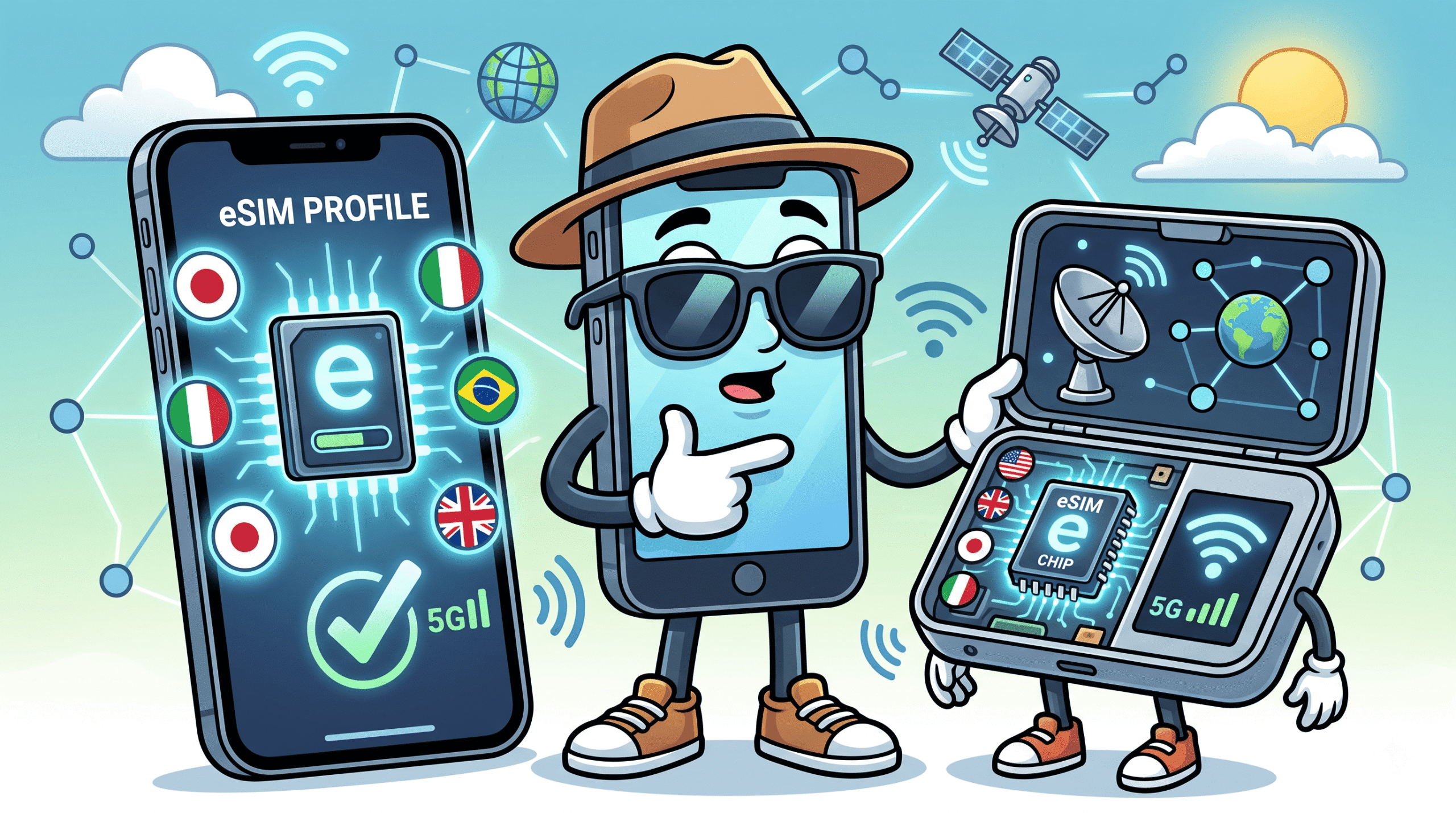
Choosing between a direct smartphone travel eSIM and a dedicated pocket Wi-Fi router depends on your travel style, device ecosystem, and group size. While installing an eSIM directly on your phone offers maximum convenience, a dedicated unlocked eSIM hotspot solves critical problems like smartphone battery drain, laptop connectivity, and non-eSIM devices.
Core Comparison: How Both Solutions Work
Standalone Travel eSIM
A digital profile downloaded directly onto your phone’s internal eSIM chip. It connects your smartphone to local network towers without requiring extra hardware.
Unlocked eSIM Pocket Wi-Fi
A standalone portable travel router (like the Linklan eSIM Hotspot) with built-in eSIM hardware. You load digital data plans into the router, creating a private Wi-Fi network for up to 16 devices.
1. Battery Drain and Device Performance
Using your phone as a personal hotspot to share data with a laptop or companion creates severe thermal stress and drains your phone battery within 3 to 4 hours. Because smartphones are not engineered to function as continuous Wi-Fi broadcast stations, tethering degrades device performance quickly.
A dedicated device like the Linklan LA7 eSIM Hotspot carries its own high-capacity 5,000mAh battery. It handles all cellular routing, network negotiation, and Wi-Fi broadcast independently, leaving your smartphone battery intact for photos, translation, and navigation.
2. Device Compatibility & Group Travel
Not every travel gadget supports digital eSIM profiles:
- Laptops, Kindles, handheld gaming consoles (Nintendo Switch, Steam Deck), and older smartphones lack internal eSIM chips.
- Family members or group travel companions often carry carrier-locked phones that cannot accept third-party eSIMs.
An open pocket Wi-Fi router broadcasts a standard 2.4GHz / 5GHz Wi-Fi signal. Any device that connects to regular home Wi-Fi connects to the hotspot seamlessly, regardless of carrier locks or hardware age.
3. The Open Hotspot Revolution (No Locked vSIMs)
Traditional rental pocket Wi-Fi units (or proprietary virtual SIM devices) force you into expensive daily rental fees, strict data throttling, and airport return counters. If you lose or damage the rental unit, penalty fees can exceed $150.
The Linklan eSIM Hotspot is fully unlocked. Unlike locked proprietary routers, it allows you to install and switch affordable prepaid data packages from hundreds of digital stores—including high-value plans from MobiMatter. You manage profiles via an app and avoid airport rental desks entirely.
Cost Evaluation: Which Option Saves You More?
| Travel Scenario | Best Choice | Estimated Cost Breakdown | Why It Wins |
|---|---|---|---|
| Solo Traveler (1 Phone) | Standalone MobiMatter eSIM | $5 – $15 total | Zero hardware cost; instant QR activation directly on device. |
| Couples / Small Groups | Unlocked eSIM Pocket Wi-Fi | 1 Shared Data Plan ($12 – $20) | Cheaper than buying 2–3 separate individual phone eSIM plans. |
| Remote Worker / Digital Nomad | Linklan Hotspot + Large eSIM | Hardware + Big Data Bundle | Connects laptop, tablet, and phone without phone battery drain. |
| Non-eSIM / Carrier-Locked Devices | Linklan Hotspot | Hardware + Flexible Plans | Bypasses carrier locks and connects non-eSIM hardware. |
Feature Comparison: Standalone eSIM vs. Linklan Hotspot
| Feature | Phone Travel eSIM | Linklan eSIM Hotspot |
|---|---|---|
| Hardware Investment | $0 (Uses existing phone) | One-time device purchase |
| Simultaneous Connections | 1 device (Tethering drains battery) | Up to 16 devices simultaneously |
| Battery Impact | Moderate to heavy on phone | Zero phone drain (Dedicated battery) |
| Setup Convenience | Scan QR code via settings | Install plan via Linklan App |
| Compatibility | eSIM-unlocked phones only | Any Wi-Fi-enabled device |
| eSIM Plan Freedom | Compatible with MobiMatter | Unlocked for MobiMatter & 500+ stores |
The Verdict: When to Pick Which Option
Pick a Standalone Travel eSIM if: You travel solo, carry a modern unlocked smartphone, and only need basic mobile data for messaging, maps, and ride-hailing.
Pick an Unlocked Pocket Wi-Fi Router if: You work from a laptop on the road, travel with family or friends, carry non-eSIM devices, or want to protect your phone’s battery life during long travel days.
Pro Tip: You can combine both solutions. Own a Linklan eSIM router as your core travel hardware, and load cost-effective regional data bundles from MobiMatter into it whenever you land in a new region.
Leave a Reply