
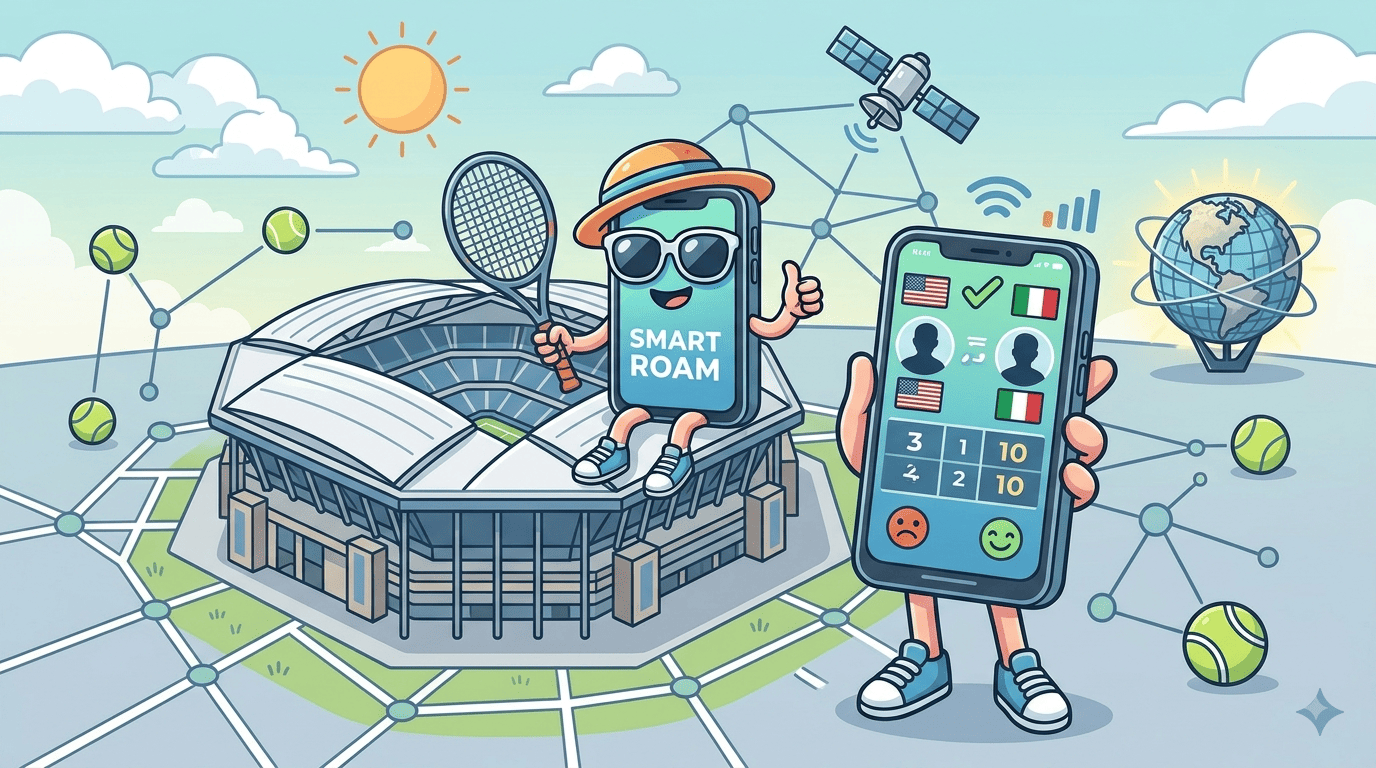
Attending the US Open Tennis Championships (August 31 – September 13, 2026) in New York City is a bucket-list trip for sports fans worldwide. Over 1.1 million visitors converge on the USTA Billie Jean King National Tennis Center, with roughly 20% traveling internationally from tennis-loving nations like the UK, Germany, Brazil, and Italy. Experiencing the electric energy of Arthur Ashe Stadium requires smooth digital planning.
Flushing Meadows: Grand Slam Culture & Historic Grounds
The US Open is the final Grand Slam of the tennis calendar, known for its loud night sessions, celebrity sightings, and the iconic Honey Deuce cocktail. The tournament takes place in Flushing Meadows–Corona Park in Queens, grounds that previously hosted both the 1939 and 1964 World’s Fairs.
- Arthur Ashe Stadium: With a capacity of nearly 24,000, it is the largest tennis stadium in the world. Night matches under the retractable roof provide a gladiatorial atmosphere unlike Wimbledon or Roland Garros.
- The Unisphere & Queens Sights: Steps outside the tennis center stands the colossal steel Unisphere globe. Queens is also the most ethnically diverse urban area in the world, offering world-class dining in nearby Flushing (Chinatown) and Jackson Heights.
- The 7 Train Connection: Most visitors ride the iconic “7 Train” subway line directly from Grand Central or Times Square out to Mets–Willets Point station.
Why Digital Connectivity is Essential at the Open
The modern US Open fan experience is fully digitized. Having high-speed mobile data is required from the moment you step onto the subway platform:
1. Digital Ticketing Gates
Physical paper tickets are obsolete. Entry passes are managed through Ticketmaster dynamic barcodes that refresh constantly and cannot be screenshotted. Pulling up tickets at crowded entry gates requires active data.
2. Live Match Tracking
With dozens of matches happening simultaneously across outer courts, Louis Armstrong, and Grandstand, the official US Open app is vital to track live match scores, practice schedules, and court changes.
The US Airport SIM Trap vs. Travel eSIMs
Landing at JFK or Newark and trying to buy a physical prepaid SIM card at an airport kiosk is notoriously expensive and inefficient. US airport telecom desks frequently charge $70 to $100 for basic tourist packages, and domestic carrier setup fees add unnecessary expense.
Using a digital travel eSIM allows you to set up high-speed US mobile data before boarding your flight. Your phone connects to major Tier-1 networks (such as AT&T and T-Mobile) the second your plane lands in New York.
| Option | Setup Time | Coverage & Speed | Typical Cost (10–20 GB) |
|---|---|---|---|
| Airport Kiosks (JFK/EWR) | 30–45 mins waiting in line | Varies (often restricted) | $70 – $100+ |
| Home Carrier Daily Pass | Automatic | Daily throttled limits | $10 – $12 per day ($140+ total) |
| MobiMatter USA Travel eSIM | ⚡ Instant QR Code scan | Tier-1 5G (AT&T / T-Mobile) | $11.99 – $19.99 |
Recommended USA eSIM Packages for US Open Travelers
MobiMatter offers cost-effective data bundles tailored for visitors spending one to two weeks in New York:
- USA 10 GB (30 Days): Great for solo fans attending several day/night sessions and navigating subway transit.
- USA 20 GB (30 Days): Ideal for heavy social sharing, streaming commentary, and hotspotting to laptops.
- North America Multi-Country: Seamless roaming if your trip combines New York with stops in Toronto, Montreal, or Mexico.
Pro Tip for Flushing Meadows: While grounds-wide public Wi-Fi exists, it often slows down when 70,000 fans pack the boardwalk simultaneously between afternoon and evening sessions. Keeping your primary cellular line set to a dedicated eSIM ensures your rideshare pickups and ticket wallets load instantly.
Leave a Reply