
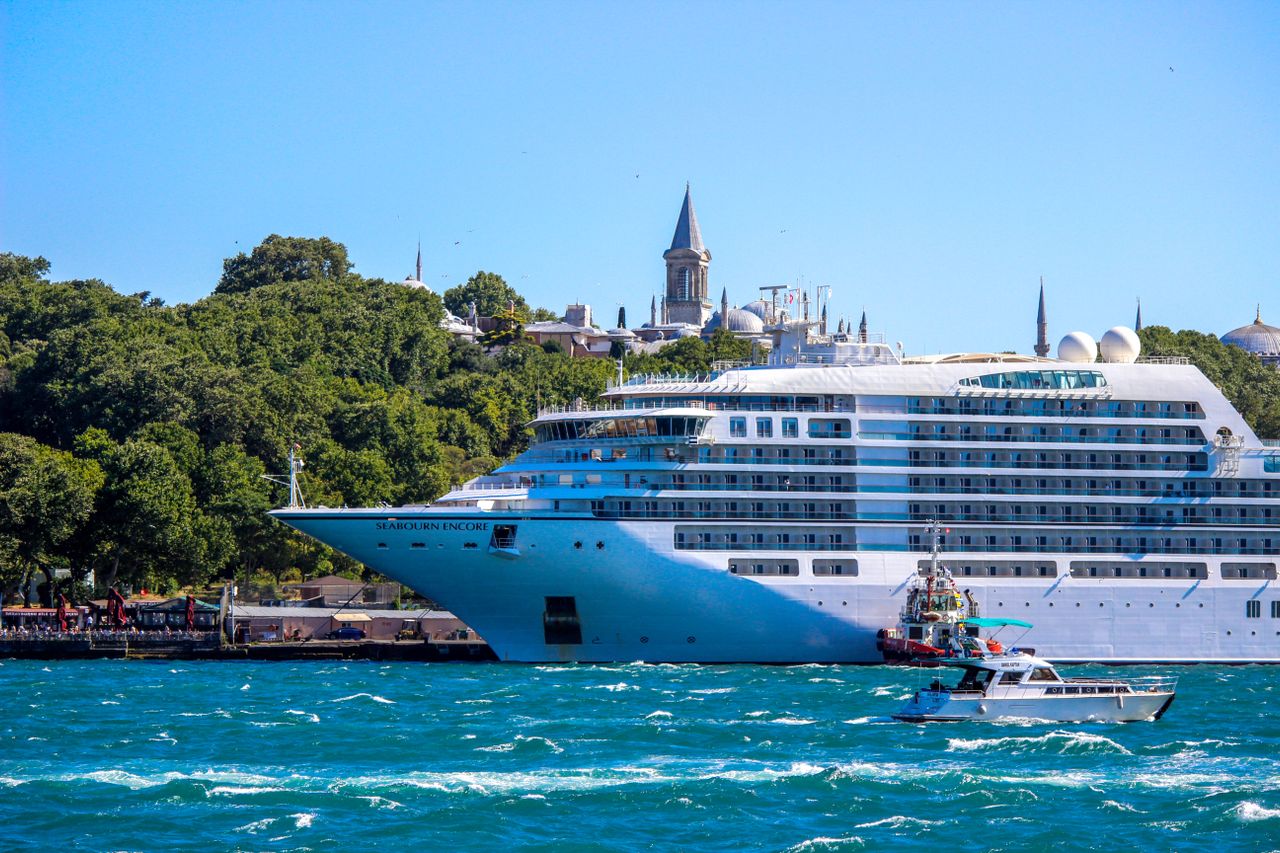
Your cruise ship pulls away from the pier, sails twelve nautical miles past the coastline, and enters international waters. Your smartphone automatically switches from shore towers to the ship’s onboard satellite cellular network, often displayed as Cellular at Sea or Telenor Maritime. Within minutes, background cloud photo backups and app updates consume fifty megabytes of satellite data, triggering an automatic carrier roaming bill exceeding $1,000.
Standard domestic carrier day passes do not cover maritime satellite towers, and cruise lines charge $25 to $38 per day per device for sluggish cabin Wi-Fi. You can avoid maritime bill shock and stay online across every stop on your itinerary. Switching your handset to Airplane Mode at sea and installing a dedicated cruise ship travel eSIM before departure gives you affordable, high-speed 5G data the moment your ship docks in port.
The Cellular at Sea Roaming Trap and Port Kiosk Markups
Cruise vessels operate private satellite base stations that broadcast cellular signals throughout passenger decks. Because these towers sit outside national terrestrial borders, mobile operators bill maritime connections at punitive pay-per-use rates ranging from $15 to $20 per megabyte. Even if you never open a web browser, silent operating system refreshes and incoming email syncs generate massive roaming charges before you return home.
Waiting until you disembark to buy local connectivity creates another travel bottleneck. Cruise terminal kiosks charge steep tourist premiums for physical SIM cards, enforce passport registration queues, and lock your line to a single country. When your ship sails overnight to a neighboring nation, that local card stops working entirely. Buying a multi-country digital profile before boarding eliminates port queues and keeps you connected across borders.
Multi-port itineraries require regional data coverage rather than single-country plans. MobiMatter offers unified regional bundles covering over 35 European destinations for Mediterranean voyages, alongside multi-island Caribbean packages. Starting between $1.00 and $2.50 per gigabyte, a single regional profile transitions automatically across local land networks at every port of call on your sailing schedule.
Coastal Signal Physics and Port Terminal Congestion
Land-based digital profiles connect to national cellular infrastructure when your vessel enters coastal waters or docks at a terminal. In Mediterranean hubs like Barcelona, Civitavecchia, and Piraeus, Tier-1 operators including Vodafone, Orange, and Cosmote deploy high-capacity 5G on mid-band n78 (3.5 GHz) alongside low-band LTE frequencies such as Band 20 (800 MHz). In Caribbean ports, networks like Digicel and Claro utilize low-band 700 MHz spectrum to project signals across harbors and beaches.
Steel ship hulls and tinted cabin glass heavily attenuate high-frequency radio waves, meaning interior staterooms often lose shore reception while open upper decks maintain strong 4G or 5G bars. Furthermore, when 4,000 passengers disembark simultaneously in a small port town, local dockside cell towers suffer acute bandwidth saturation.
Traveling with Family or Multiple Devices?
Tethering your laptop or buying four separate phone eSIMs drains batteries and runs up costs. The Linklan LA7 Open Pocket Wi-Fi connects up to 16 devices on an independent 5,000mAh battery (12+ hours runtime) using any low-cost travel eSIM profile.
At-Sea Safeguards and Manual Port Carrier Switching
Protect your mobile account during sea days and bypass crowded harbor masts in port with four manual adjustments:
- Enable Airplane Mode Before Sail-Away: Turn on Airplane Mode thirty minutes before your ship leaves the pier to block automatic handshakes with onboard maritime satellite towers.
- Disable Primary SIM Roaming: Open your device cellular settings and keep Data Roaming turned off on your home carrier line throughout the entire voyage.
- Override Congested Harbor Towers: When dockside crowds slow down your port connection, go to Settings, select Network Selection, disable Automatic, and switch manually to an alternate partner carrier.
- Cycle Radio Connections: Toggle Airplane Mode on for ten seconds after stepping onto the pier to lock onto a fresh, high-speed terrestrial base station.
| Connectivity Option | Cellular at Sea Roaming | Cruise Ship Cabin Wi-Fi | Regional Port Travel eSIM |
|---|---|---|---|
| Average Cost | $15 to $20 per MB | $25 to $38 per day per device | $1.00 to $2.50 per GB |
| Coverage Zone | Open ocean satellite only | Onboard ship decks only | Every port of call on itinerary |
| Connection Speed | High-latency 3G/4G | Throttled shared satellite | Full local 4G and 5G speeds |
| Multi-Device Sharing | Risk of extreme overages | Locked to one login MAC | Flexible router hotspot sharing |
| Bill Shock Risk | Severe ($1,000+ surprises) | Fixed daily fee | Zero (Capped prepaid balance) |
Hardware Readiness and Family Cabin Connectivity
Is Your Phone eSIM Ready?
Select your device manufacturer and model to verify hardware and carrier compatibility.
Open your phone dialer and dial *#06#. If a 32-digit EID number or barcode appears on screen alongside your IMEI, your device hardware contains an eSIM chip. Ensure your device is carrier-unlocked before purchasing.
Families and groups traveling together face steep expenses when trying to keep multiple smartphones, iPads, and handheld gaming consoles online. Cruise lines charge separate daily Wi-Fi fees for each individual device, while using a smartphone as an all-day hotspot during shore excursions drains your battery before afternoon boarding calls.
Packing an unlocked portable router like the Linklan LA7 Pocket WiFi solves multi-screen cruise connectivity cleanly. The Linklan LA7 houses an integrated eUICC chip, allowing you to download any MobiMatter regional cruise package directly via Bluetooth without renting expensive hardware. When docked in port, placing the router near a cabin balcony door captures strong coastal 5G signals and broadcasts private Wi-Fi across up to 16 devices simultaneously. Its 5,000mAh battery delivers 12 hours of runtime, keeping family phones and navigation maps powered throughout long shore excursions.
Frequently Asked Questions About Cruise Ship Travel eSIMs
Do AT&T International Day Pass or Verizon TravelPass cover cruise ships?
No. Standard international roaming day passes offered by major domestic carriers apply exclusively to land-based cellular networks in approved countries. Once your ship enters international waters and connects to Cellular at Sea or Telenor Maritime satellite towers, your carrier bills usage at uncapped maritime pay-per-use rates unless you purchase a dedicated cruise add-on package prior to sailing.
How far from shore will my land-based travel eSIM maintain a signal?
Terrestrial coastal cell towers typically project usable 4G LTE signals between six and twelve nautical miles offshore, depending on coastal terrain and weather conditions. Once your vessel passes twelve nautical miles from land, shore signals drop completely. Always activate Airplane Mode before leaving coastal waters so your handset does not latch onto the ship’s satellite network.
Can I use ship Wi-Fi for messaging while keeping my port eSIM installed?
Yes. Keep your phone in Airplane Mode while at sea, then manually toggle Wi-Fi back on to connect to the cruise line’s onboard intranet or paid Wi-Fi package. Your regional travel profile remains safely dormant in your device settings without incurring charges, ready to reconnect automatically as soon as you disable Airplane Mode at your next port of call.
Leave a Reply